

The first post with the red text talks about cultivation. And that the optimal person is not someone who is good in all areas, but knows how to delegate. They cultivate their areas of strength. A slight divergence- if I may- I have a friend who I very much admire. I value people that value things. She is, for the most part, quite casual about things, in the sense that she is easy-going. When it comes to certain things that she cares about, she is willing to splurge on them. For example, her computer mouse is a professional gaming mouse that she clearly invested in, and her headphones as well. For other things, she is a lot more casual about them. Like moisturizer. And other things (that do not come immediately to mind). She would use her pencils down to the nub. I want to treat my personality in the same way, to identify and work on my strengths.
I just want to reiterate a sentence in the first post with the red text. “Those who cultivate the inferior parts of their nature are inferior people. Those who cultivate the superior parts of their nature are superior people.” The second sentence is easier to understand on the first read – one should identify their strengths and build on them. The first sentence I struggled with more. How is weakness cultivated? Isn’t the nature of cultivation to make something inferior/weak into something substantial/strong? Isn’t weakness usually a result of neglect? Is this process thus a result of misidentification rather than neglect then?
I have many faults, but the main one that I frustrates the most and seems the most slippery is my tendency to lie. I lie constantly, in big and small ways, and I’m not always able to point them out. This attracts me to straightforward people, like my aforementioned friend. Because I feel like with them, there are no games. What you see is what you get, and you know that whatever they tell you is what they genuinely feel. Perhaps if I were to continue on my path to inferiority it would mean getting better at lying, which I definitely do not want to do. I want to get more honest. This is about increasing my perception as well. Straightforward people seem to be very perceptive of themselves, because they present their boundaries clearly.
I want to evaluate my strengths, so that in this one month of work, it can be focused and be building towards a goal. I’ve been told my biggest strength is my tenacity. But without proper direction even the greatest force would go to waste. I definitely “get off” to presenting an image of determination, but often my true laziness takes over and I end up having to scramble at the end. I think something I have maintained though, is the “thought”. You know the tiring saying “its the thought that counts”. What bullshit. You cant eat a thought. A thought can’t pay for gas. If I care about something but execute it in a bad way it doesn’t mean shit. I would need to care more deliberately.
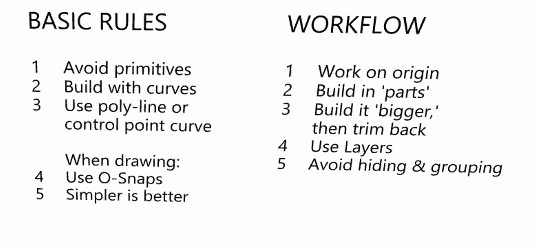
In terms of skill, I do want to understand CAD at a conceptual level. The current tutorials that I follow, the guy goes over basic steps with little connection to each other, which does not inform my understanding of the logic of the system. What is a good CAD drawing? I think I need to read something that will teach me what makes a good CAD drawing, and inform the important questions I need to answer. I also need to look at examples of good, clear drawings, draw out why they are effective and use that information to my advantage.
The following paragraphs have been quite fragmented, so now I will attempt to clarify them a bit. I think the main goal I need to work toward is breaking down tasks into manageable steps, rather then approach them in one big rush. Then I should try to understand them at a fundamental level- it is more about the synthesis of parts than the parts themselves.
/shiftposter
 full-of-shift.com